

What to Ask Before Hiring a Home Remodeling Contractor in New Jersey
What to Ask Before Hiring a Home Remodeling Contractor in New Jersey
Hiring a remodeling contractor is an important decision, whether you are updating a kitchen, renovating a bathroom, improving an interior space, or planning outdoor work. A professional conversation should cover more than the appearance you want to create. It should also address the project scope, permits, materials, schedule, payment terms, and how unexpected conditions will be handled.
The right questions can help you compare proposals more fairly and understand what you are agreeing to before construction begins. Use the checklist below when speaking with a home remodeling contractor in New Jersey.
1. Are you registered to perform residential home improvements in New Jersey?
New Jersey generally requires contractors performing covered residential home improvement work to register with the Division of Consumer Affairs, unless an exemption applies. The state describes covered work broadly, including remodeling, renovating, repairing, restoring, installing, and modifying residential property. You can review the state’s homeowner guidance on home improvement contractor registration.
Ask for the contractor’s registration information and verify that it applies to the type of work you are planning. You may also ask for proof of insurance, relevant references, and examples of completed projects. These steps do not replace your own judgment, but they can help establish a clearer starting point.
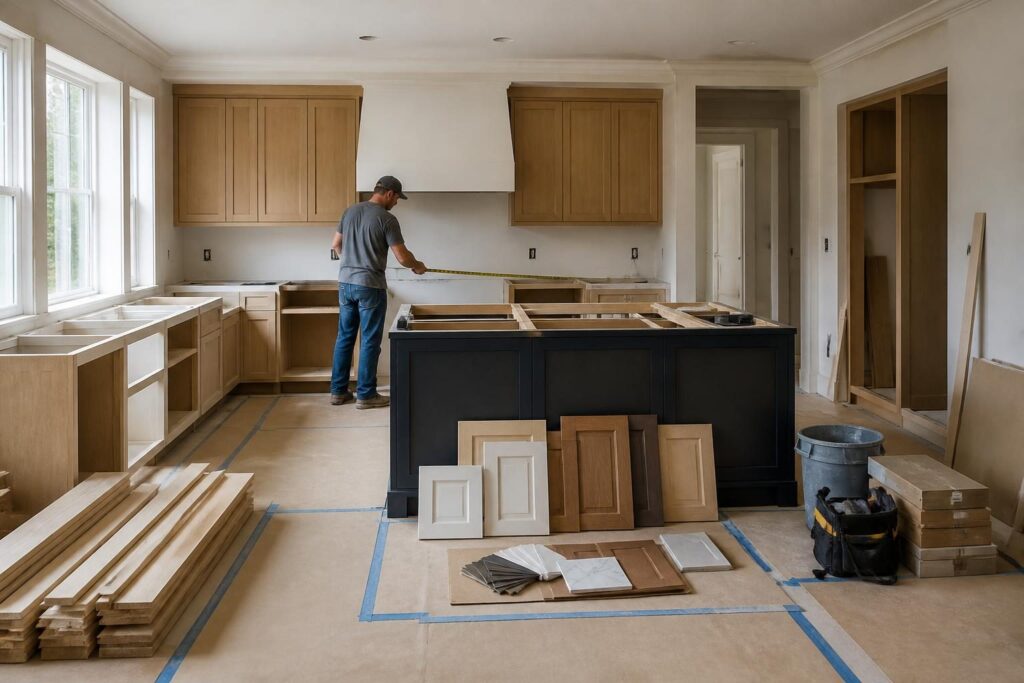
2. What exactly is included in the proposal?
A useful proposal should describe the work in enough detail that you can compare it with another estimate. Ask whether it includes:
- Demolition and removal of existing materials
- Disposal and cleanup
- Labor and subcontracted trades
- Permits and inspection coordination
- Cabinets, fixtures, flooring, tile, paint, and other finish materials
- Waterproofing, ventilation, insulation, or other behind-the-surface work
- Design or planning services
- Allowances for products that have not yet been selected
Two estimates can have very different totals because they describe different scopes of work. The lowest number is not necessarily the most economical choice if important tasks or materials are excluded. Ask the contractor to identify both inclusions and exclusions in writing.
3. Will the project require permits and inspections?
New Jersey’s official business guidance says construction, alteration, or repair work will probably require a building permit. Permits commonly relate to building, structural, electrical, HVAC, and plumbing work, and inspections may be required before work is covered or concealed. Review the state’s guidance on building permits and inspections.
Permit procedures can vary by municipality. Ask which local construction office has jurisdiction, which permits may be needed, and who will prepare and submit the applications. Also ask how inspections will be scheduled and documented.
Do not assume that a project is permit-free because it seems small or cosmetic. The local construction department is the appropriate place to confirm requirements before work starts.
4. Who will manage the project day to day?
Ask who will be your primary contact and who will supervise workers at the property. If subcontractors are involved, find out which trades they will perform and how coordination will be handled.
This is especially important for projects that involve several phases, such as a kitchen renovation with plumbing, electrical, cabinetry, flooring, and painting. A clear communication process can help you know where decisions, questions, and schedule updates should be directed.
5. What is the expected timeline?
Ask when the project could begin, how long the main phases may take, and what conditions could affect the schedule. Material availability, permit processing, inspection timing, design changes, and concealed conditions can all influence a renovation timeline.
A responsible discussion should distinguish between an estimated schedule and a guaranteed completion date. Ask which decisions must be finalized before construction begins, including tile, fixtures, appliances, paint, hardware, and other products that could affect ordering or installation.
6. How will changes and unexpected conditions be handled?
Remodeling can reveal conditions that were not visible during the initial walkthrough, such as outdated wiring, damaged plumbing, framing concerns, or water damage. Ask how the contractor will notify you, document the issue, price the additional work, and obtain approval before proceeding.
Change orders should be written clearly. They should identify the added or removed work, the cost adjustment, and any schedule impact. Avoid relying on informal conversations for significant changes.
7. What are the payment terms?
Review the payment schedule before signing. Ask what is due at each stage, which milestones trigger payment, and how approved changes will be added to the total. The contract should also explain how cancellations, delays, material selections, and unresolved work are addressed.
For a broader planning framework, you can also review SolSpace Construction’s guide to building a realistic remodeling budget.
8. How will my home be protected during construction?
If you will remain in the home, discuss access, working hours, dust control, floor protection, debris removal, and which areas will be unavailable. Ask how tools and materials will be stored and how workers will enter and leave the property.
For kitchens and bathrooms, discuss temporary arrangements before work begins. A clear plan can make an occupied renovation easier to manage.
9. How should I evaluate long-term value?
Resale appeal can be one consideration, but it should not be the only one. Think about how the project will improve daily use, storage, maintenance, comfort, durability, and the way the space fits your home.
When comparing materials or upgrades, ask about expected maintenance, replacement parts, warranty information, and compatibility with existing systems. A practical improvement that suits your household may be more valuable to you than a trend-driven feature.
10. What should be in the final contract?
Before signing, make sure the written agreement reflects your discussions. It should identify the parties, project address, scope of work, materials or allowances, estimated schedule, payment terms, permit responsibilities, change-order process, cleanup expectations, and warranty information where applicable.
Read the document carefully and ask questions about language you do not understand. A contractor who communicates clearly before construction begins is easier to evaluate than one who leaves major details vague.
A practical final checklist
- Verify registration and request proof of insurance.
- Compare written scopes, not just total prices.
- Confirm permit and inspection responsibilities with the local construction department.
- Ask who supervises the work and how updates will be provided.
- Understand the timeline and product-selection deadlines.
- Require written approval for scope, price, or schedule changes.
- Review payment terms and project protections before signing.
SolSpace Construction provides indoor and outdoor remodeling services in northern and central New Jersey, including kitchen renovations, bathroom remodels, interior improvements, and landscape projects. If you are considering a renovation, contact SolSpace Construction to discuss your needs, priorities, and questions before deciding on the next step.